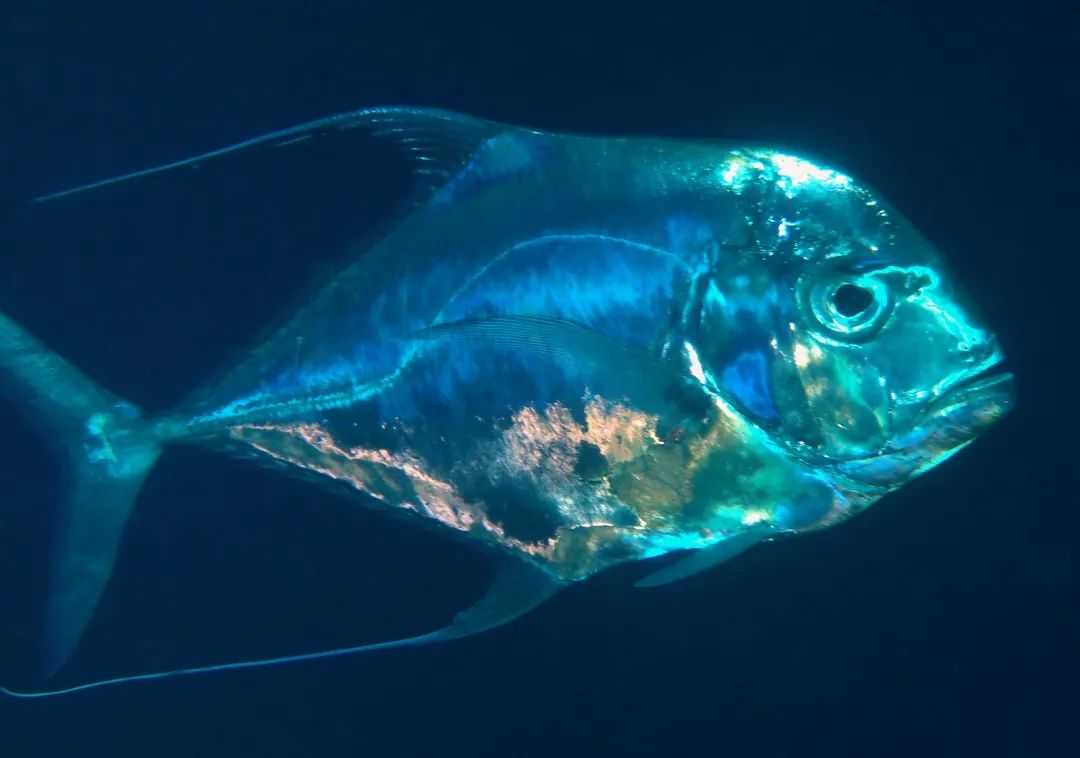
Alectis ciliaris, commonly known as the threadfin trevally or white - whiskered trevally, is a remarkable species within the Carangidae family, inhabiting the warm waters of the Atlantic, Indian, and Pacific Oceans. Renowned for its distinctive appearance and dynamic swimming behavior, this fish has earned various nicknames from local fishermen, reflecting its elegance and importance in marine ecosystems.
The threadfin trevally boasts a streamlined, laterally compressed body that can grow up to 1.8 meters in length. Its most striking feature is the elongated, filamentous rays that extend from its dorsal and anal fins, resembling delicate threads trailing behind as it glides through the water. These fins, combined with its metallic silver to bluish - gray body and dark blotches near the tail, create a visually captivating spectacle. Juveniles exhibit a more pronounced pattern, with bold black stripes and spots that serve as effective camouflage among floating debris and seaweed. As they mature, their coloration becomes more muted, and the fins' filaments become more prominent, enhancing their agility and maneuverability in open waters.
In its natural habitat, Alectis ciliaris is often found near the surface, cruising in the vicinity of reefs, estuaries, and floating objects such as logs or mats of seaweed. This species is an active predator, using its speed and sharp teeth to target a diverse diet of smaller fish, crustaceans, and cephalopods. It is known for its schooling behavior, especially during the juvenile stage, which provides protection against predators and improves hunting efficiency. Despite its adaptability, the threadfin trevally faces threats from overfishing, particularly in regions where it is prized for its sport - fishing qualities and culinary value. Additionally, habitat degradation and pollution in coastal areas impact its population. Conservation efforts, including the establishment of fishing regulations and the protection of critical habitats, are essential to safeguard this iconic species and maintain the health of marine ecosystems.